
07 Dec The Experience of Working With Patagonia
Looking back at the early days of partnering with Patagonia, it is clear that those projects helped define the craftsmanship and values that Hartigan Foley is known for today. At the time, Patagonia was already an influential brand with a strong environmental mission. They needed builders who could meet high expectations for quality while also respecting the character, history, and sustainability of their spaces. Bringing their campus improvements and first four retail locations to life was more than a building process. It was an education in how thoughtful design, responsible materials, and a committed team can create something much larger than a set of structures.
For Hartigan Foley, the experience began with Patagonia’s Ventura headquarters. The campus had an established identity, so our responsibility was not simply to update or expand but to understand what already existed. Patagonia’s team worked with a deep respect for the natural environment and expected the same of their construction partners. Before a single tool was lifted, there were long conversations about purpose, lifespan, and the environmental impact of materials. It created a project culture built on collaboration and intention rather than speed alone. Every decision had a reason behind it.
Walking the site for the first time made it clear that Patagonia viewed the campus as an extension of their values. They preferred natural light to artificial lighting, repurposed materials to new ones, and durability to anything temporary. If there was an opportunity to reuse something that already existed, they wanted it explored. These preferences challenged our team to think differently about methodology. Tasks that would be standard on a typical commercial project often required a more creative approach. Instead of replacing older lumber, we worked with it. Instead of discarding fixtures, we refinished and repurposed them. Even the smallest choices mattered, because the Patagonia team believed that the integrity of a building reflects the integrity of the people behind it.
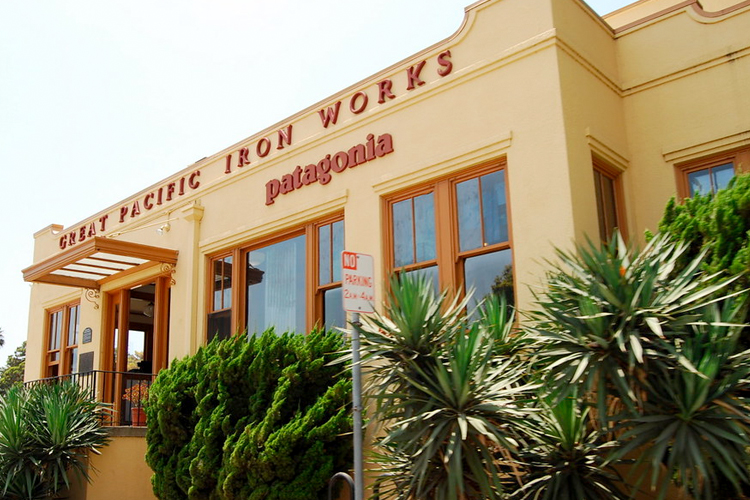
The first four retail stores followed this same philosophy but added another layer of complexity. Retail spaces require functionality, durability, and a connection to the customer experience. Patagonia’s stores were meant to feel welcoming and honest, with visible structure, raw materials, and a handcrafted sensibility. They did not want a traditional polished retail feel. They wanted something that looked lived in and built with intention. Our team had to balance efficiency with artistry, all while staying aligned with the environmental goals that Patagonia set as a non negotiable standard.
Each store had its own personality based on the region and the community it served. Hartigan Foley worked closely with Patagonia’s architects and designers to understand the story behind each location. In some cases the historic fabric of the building needed to be preserved. In others the interiors required more extensive structural work. What stayed constant was the expectation that every material should serve a purpose beyond appearance. Reclaimed wood, recycled steel, and low impact finishes were used wherever possible. The stores needed to feel like Patagonia stores, not generic storefronts dressed up with branding.
One of the most memorable aspects of the retail projects was the level of involvement from the Patagonia team. They did not simply hand over plans. They wanted to walk the sites, see how materials behaved in the space, and adjust based on what felt right rather than what was easiest. There were moments when a design choice meant more coordination, more craftsmanship, or more time, but the outcome was always worth it. This collaborative atmosphere created a sense of shared ownership that is rare in commercial construction.
The partnership also reinforced the importance of communication. From weekly site meetings to spontaneous discussions about sourcing, each stakeholder stayed deeply engaged. Patagonia’s values required transparency, so cost considerations, scheduling challenges, and material availability were discussed openly. It created a remarkably smooth working relationship because everyone at the table trusted the commitment and motives of the others. That trust allowed Hartigan Foley to deliver spaces that reflected both the vision and the mission of the brand.
By the time the campus work and the first four stores were complete, Hartigan Foley had grown not only as a builder but as a team. These projects strengthened our belief that spaces can hold meaning when they are created with intention. Patagonia showed us how a client’s values can become a construction compass. They also demonstrated that sustainability and high quality craftsmanship can work together when creative problem solving is encouraged.
Looking back, the experience shaped our approach to every project that followed. Building for Patagonia was not just a milestone. It was an education in purpose driven construction, and it continues to influence the way Hartigan Foley engages with clients who care deeply about the story their spaces tell.

No Comments